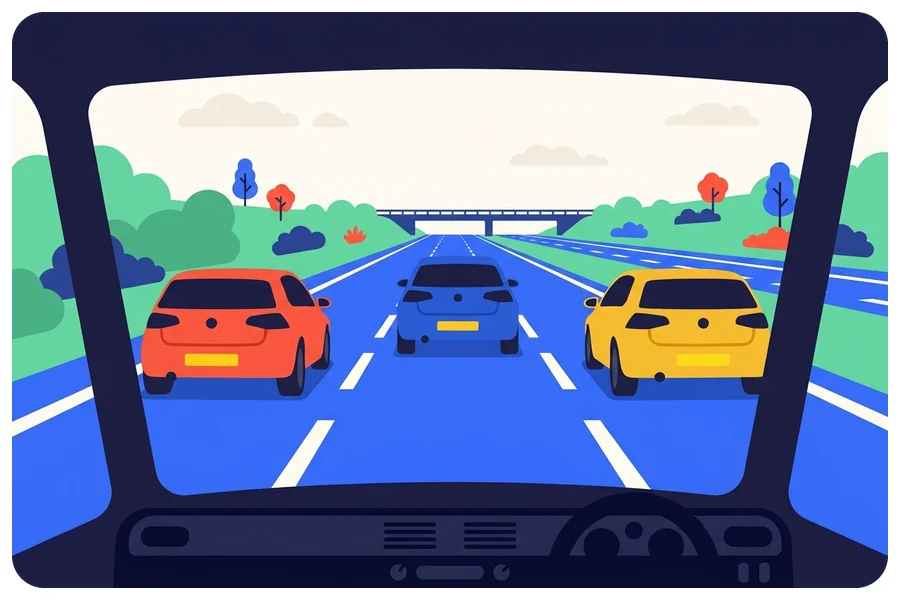
The number plate game is a word race using the three random letters at the end of a UK number plate: a passenger reads them out, and everyone tries to make a word that uses those letters in the same order, so KTN becomes kitten and RBT becomes rabbit. First valid word scores. On a motorway there’s always another plate in front of you.
UK plates carry more information than most drivers realise, which gives you three more games on top of the word race.
How to read a UK plate
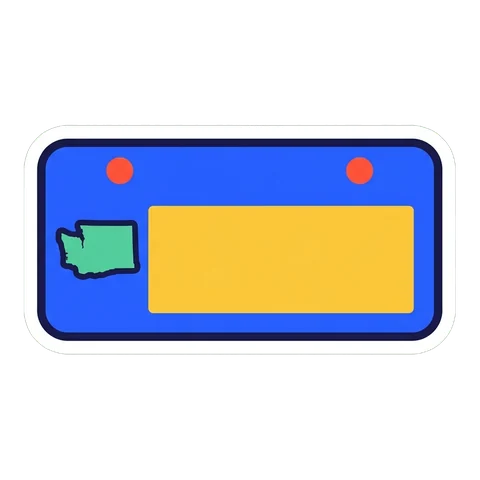
On any plate issued since September 2001, the format is two letters, two numbers, three letters, for example LB24 KTN.
- LB is the area code. The first letter shows the region where the car was first registered: L for London, M for Manchester and Merseyside, Y for Yorkshire, S for Scotland, C for Wales (Cymru).
- 24 is the age identifier. Cars registered from March carry the year (24 = March 2024); from September, the year plus 50 (74 = September 2024).
- KTN is random, and never includes I or Q.
Plates from before 2001 start with a single letter and look like R123 ABC. Northern Ireland plates use a different system and have no age identifier, so leave them out.
Game 1: Plate words
- A passenger reads the last three letters of the car in front.
- Everyone makes a word with those letters in order. Other letters can go before, between and after them: KTN gives kitten, kitchen or knitting. Ketchup fails, because it has no N after the T.
- First valid word wins the point. Anyone can challenge a word; the dictionary on a phone decides.
- Bonus point for the shortest word. After ten seconds, whoever found the shortest valid word scores again. For KTN, “kitten” (6 letters) beats “kitchen” (7).
Some sets, like XJV, are close to impossible. Allow a pass: if nobody finds a word in thirty seconds, move to the next car.
Game 2: Area code collection
There are 19 regional first letters in current use: A, B, C, D, E, F, G, H, K, L, M, N, O, P, R, S, V, W and Y. The car works together to spot all 19 during the journey. On a long run north you’ll often notice the mix change: more N, Y and S plates the closer you get to Scotland.
This is the closest UK cousin to the American license plate game, but it plays differently. Nineteen letters is a list you can finish in a day, and dealers register cars far from where they end up, so rare letters appear anywhere.
Game 3: Oldest car wins
Everyone watches for the oldest age identifier during one motorway stretch. A 51 plate (September 2001) beats anything newer; any plate from before 2001 beats the lot. Kids pick up the plus-50 rule within a few plates, and after that they start guessing the age of every car on the drive.
Game 4: Plate maths
A passenger reads out the two digits of the age identifier. For younger children, the first to say whether it’s odd or even scores. For confident adders, add the two digits (74 makes 11). For kids working on times tables, multiply them (74 makes 28).
Versions by age
Ages 6 to 8
Plate maths and odd-or-even. For plate words, use only the first two of the three letters, so KT can be kite or kit.
Ages 9 to 12
Plate words with the shortest-word bonus.
Teens and adults
Plate words backwards: the letters must appear in reverse order. KTN becomes NTK, so you need an N, then a T, then a K. Nutcracker works; kitten doesn’t. Expect a lot of passes.
On a long motorway run
- Play plate words in rounds of ten plates, then swap to area codes for a while. The word race is intense and tires younger players after fifteen minutes.
- Services car parks are the best place for the area code hunt. Walk a lap before getting back in and tick off anything new.
- In slow traffic, the oldest-car game works best: you have time to read every plate around you.
When the word race stalls, it’s usually because the last few plates were unplayable. Skip three cars and take the fourth, or let the youngest player pick which plate to use.
The driver’s part
The driver never reads a plate, but they can play plate words by ear once a passenger reads the three letters aloud, since that needs no looking.
For a word race that needs no plates at all, try Categories.