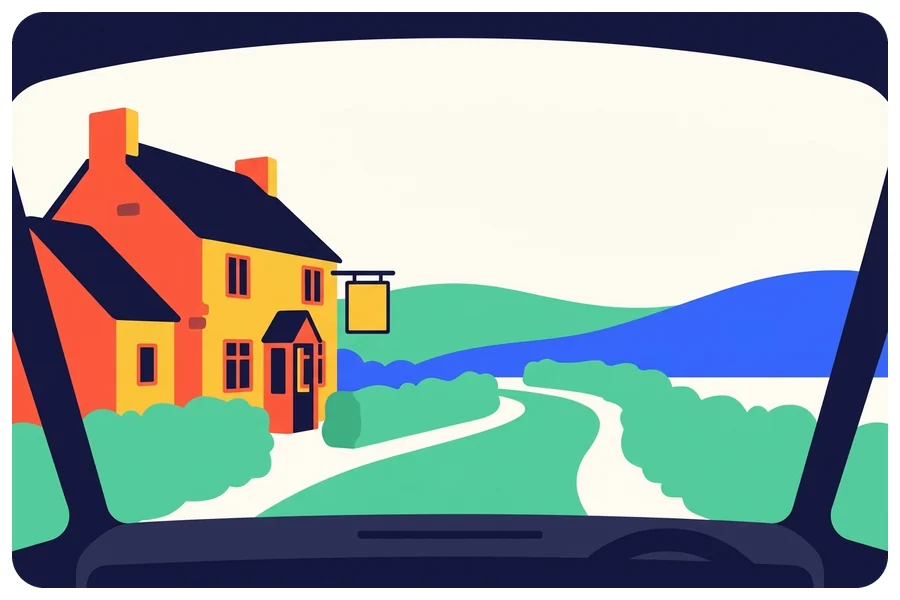
Car cricket is a batting game played with pub signs: the batter scores a run for every leg in the name of each pub the car passes, so the Red Lion is four runs and the Coach and Horses is eight or more. A pub whose name has no legs at all, like the Crown or the Rose and Crown, is a wicket. Each batter keeps going until they’re out, and the highest total wins.
It’s a proper British car journey game, which means it only works where there are pubs. Save it for A-roads and B-roads through villages, where you can pass several in ten minutes.
How to play
- Pick the first batter. Everyone else is fielding, which here means reading out the pub names.
- For each pub you pass, count the legs in its name. People have two, most animals four, birds two. The Red Lion: 4. The Green Man: 2. The Swan: 2.
- Legless names are wickets: the Crown, the Plough, the Bell, the Ship. Heads don’t count either, so the King’s Head is out.
- Each batter has three wickets. After the third, the next player bats.
- Highest innings total wins. On a long drive, play two innings each, like a Test match.
Settling the scoring rows
Pub names are wonderfully odd, and car cricket arguments are half the fun. Agree these before you start:
- Plurals without a number. The Fox and Hounds: count the hounds as two, so 8 runs. Anything more generous and one pub wins the match.
- Numbers. The Three Horseshoes has no legs, so it’s out. The Five Bells is out too. The Two Brewers is 4.
- The Cricketers. Traditionally 22 runs, a full team of eleven each side. It’s the jackpot.
- Creatures with more legs. The Black Spider could be 8. Allow it; it’s too rare to spoil anything.
- Pub closed or boarded up. Still counts. The sign is what matters.
The motorway problem, and a fix
There are no pubs on the motorway, so a two-hour run on the M5 means no cricket at all. Most families just stop playing. Motorway cricket keeps the match going:
- A bridge you pass under is 1 run.
- A services sign is a boundary, 4 runs.
- A sign for a town beginning with the batter’s initial is a six.
- A roadworks sign is a wicket.
It scores lower and faster than pub cricket, so keep motorway innings separate and add them to the batter’s total when you turn off.
Versions by age
Ages 6 to 8
One wicket costs a run, not an innings, so little ones never sit out. An adult reads out the pub name and helps count legs.
Ages 9 to 12
Full rules. They’ll become experts in pub names and start predicting what’s coming in the next village.
Teens and adults
Add a bowler. The fielding player can call “no ball” on a bad leg count, and a successful challenge gives the batter one run less.
Who reads the signs
Pub signs come up quickly on a village road, and the driver shouldn’t be reading them. The driver can umpire instead: rule on disputed legs, keep score in their head, and give the innings total at each stop. The front passenger does the reading.
When the innings stalls
Long stretches with no pubs will stall the match.
If the motorway version doesn’t appeal, pause the cricket and run the yellow car game until the next village. Players who like the numbers side of cricket usually enjoy the number plate game too, which scores every passing car.