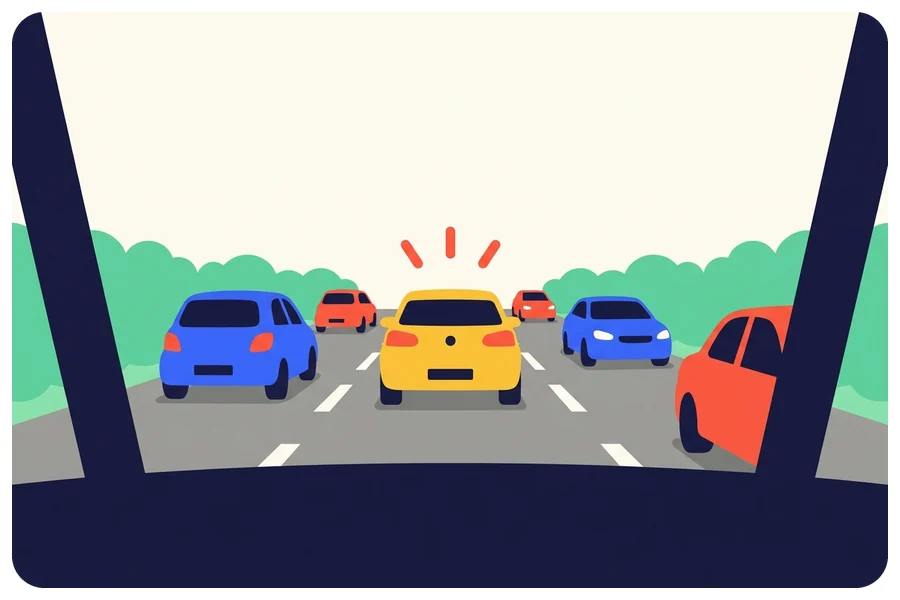
The yellow car game is a spotting race: the first person to see a yellow car and shout “yellow car” scores a point, and whoever has the most points at the end of the journey wins. It’s one of the best-known car games in Britain for good reason. It needs nothing, anyone from four upwards can play, and it runs quietly in the background of a long drive until someone yells.
The rules take ten seconds to explain. The arguments take longer, so most of this page is about settling them before you leave.
The basic game
- Shout “yellow car” when you see one. First clear shout gets the point.
- It has to be a car, and it has to be yellow.
- A wrong shout costs a point.
- Keep a running score. The winner is whoever leads when you pull up.
House rules that stop the rows
Every family that plays yellow car ends up arguing about the same five things. Decide them on the driveway:
- Vans, lorries and taxis. The most common rule is cars only. That rules out AA and RAC vans, which are everywhere on the motorway and would otherwise decide the game.
- Shades. Mustard, gold and cream cause most disputes. The test: would everyone in the car call it yellow? If there’s a split, the driver has the casting vote.
- Parked cars. Counting them makes the game faster in towns. Not counting them keeps it fair between the side facing the pavement and the side facing traffic.
- The same car twice. A car can only be claimed once. If you pass the same yellow Fiesta at the services and again on the slip road, it’s already spent.
- Yellow on the car. Yellow stripes, yellow number plates and yellow roof boxes don’t count. Rear number plates are yellow on every UK car, and without this rule the game ends in chaos.
Scoring for a long car journey
On a four-hour run up the M6, flat scoring gets dull because one sharp-eyed player pulls away early. Two tweaks:
- Rare yellows score more. A classic car or a sports car in yellow earns 3 points. A yellow Mini or Beetle earns 2.
- Catch-up rule. Whoever is in last place at each services stop gets the next point doubled.
If the score is lopsided, switch to a team game: everyone versus the journey. Set a target before you leave (say, 15 yellow cars between home and Grandma’s) and see if the car beats it.
Versions by age
Ages 4 to 6
Any yellow vehicle counts, vans and diggers included. They’ll shout at lemons on the back seat. Let the little ones have a few free points.
Ages 7 to 12
Cars only, wrong shouts cost a point. Give them the job of scorekeeper in a notebook.
Teens and adults
Add a second colour worth more. Pink or purple cars score 5 and turn up just often enough to keep everyone looking.
The driver’s job
Hunting for cars means looking away from the road, so the driver doesn’t score. The driver is the referee instead: ruling on mustard, reading out the scores at each stop, and deciding what counts as a van.
When yellow cars dry up
On quiet A-roads through the hills you can go half an hour without one.
Rather than staring out of the window, run a second game alongside: the number plate game turns every car into something to score, and car cricket takes over as soon as you reach a road with pubs on it. Yellow car carries on in the background, so the first one you see still wins the point.